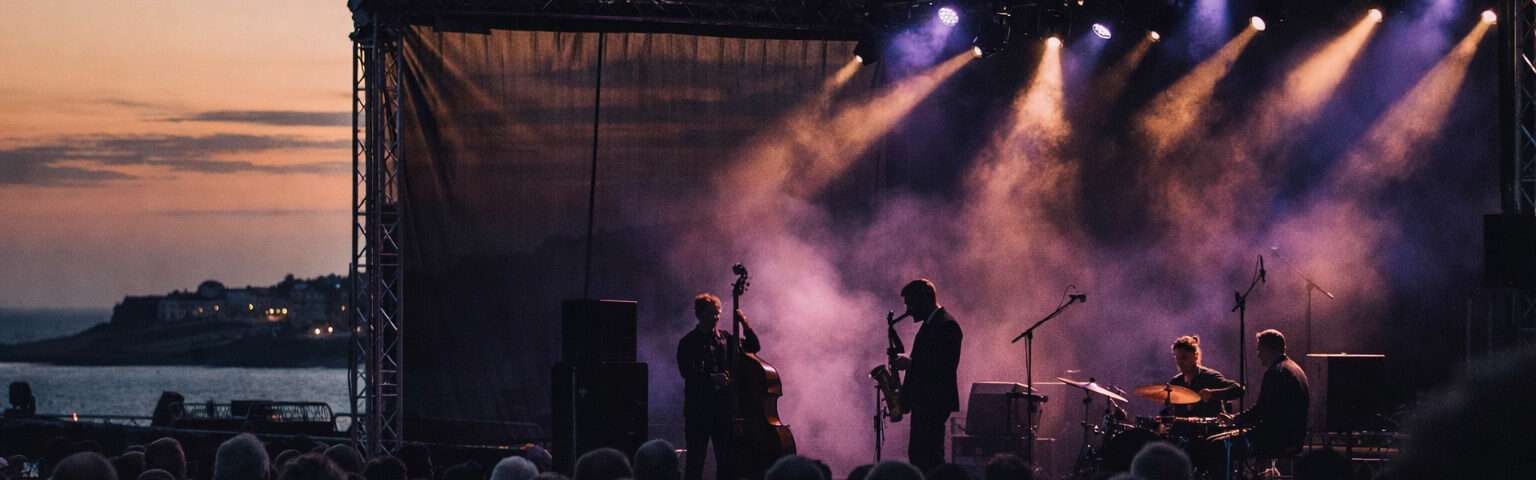
Jazz festivals have always offered more than performance schedules. At their best, they create temporary worlds: cities reshaped by sound, late-night conversations drifting out of clubs, seaside promenades given new purpose by brass and rhythm, and audiences gathering not simply to watch, but to inhabit a shared atmosphere. This is why festival culture remains central to the life of jazz. It provides a setting in which music can move beyond the stage and into the texture of a place.
What distinguishes a memorable festival is rarely scale alone. The most enduring events combine strong programming with context. Venue choice matters. Timing matters. The relationship between headline performances and smaller discoveries matters. A great jazz festival is not just a list of artists. It is a sequence of moods, spaces, and encounters arranged with enough intelligence to make the entire experience feel coherent.
Why Festivals Still Matter
In an age of constant streaming and instant access, live festivals perform an essential corrective function. They restore scarcity, presence, and anticipation. A set heard once, in the right room, with the right crowd, still carries a force that recorded music cannot fully replicate. Jazz in particular depends on this condition. Improvisation only achieves its full meaning when risk is felt in real time.
Festivals also create unusual proximity between established names and emerging talent. A major artist may anchor the evening while an unknown quartet quietly defines the afternoon. This layered structure is one of the genre’s great advantages. Audiences arrive for familiarity, but often leave remembering surprise.
Place, Atmosphere, and Timing
There is also a spatial intelligence to strong festival design. Coastal towns, historic districts, intimate theatres, converted halls, terrace bars, and late-night basements all shape the emotional tone of a programme. Jazz responds especially well to places with texture. The music gains something from worn wood, dim light, close seating, and the sense that an evening may run slightly longer than expected.
Timing matters just as much. The best festival calendars understand pacing. They leave room between intensity and quiet, between major performances and spontaneous discovery. Too much congestion reduces the experience to logistics. Too little structure lets energy dissipate. The strongest festivals understand rhythm both onstage and off it.
The Return of the Curated Experience
One reason jazz festivals continue to hold cultural weight is that they offer something increasingly rare: curation. In a world saturated with choice, the value of a well-composed programme has only increased. Audiences are not simply looking for more options. They are looking for stronger ones. A festival that reflects judgement, restraint, and a clear sense of identity feels immediately more trustworthy than one that attempts to be everything at once.
That is why festival highlights remain worth documenting. They reveal more than line-ups. They show how music, place, and atmosphere can still be arranged into something memorable. For jazz, which has always relied on the tension between freedom and form, the festival remains one of its most natural homes.