
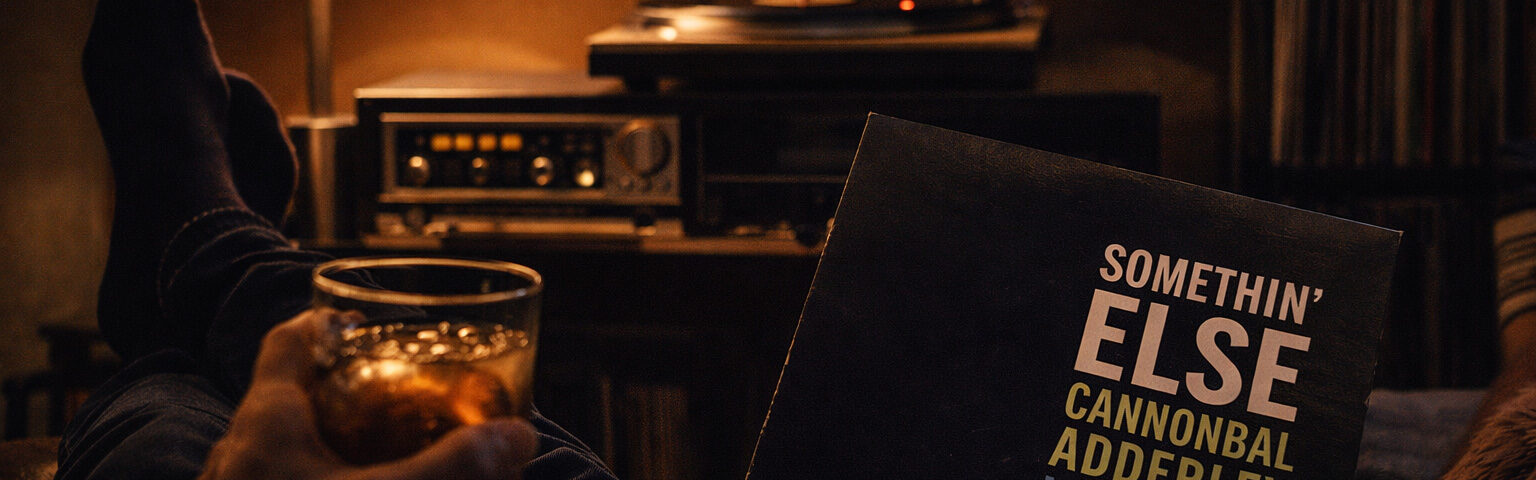
Listening well is one of jazz culture’s quiet disciplines. In an age of constant interruption, it has become increasingly rare to sit with a record, a live set, or even a single phrase long enough for it to reveal its shape. Jazz asks more than passive attention. It asks for patience, memory, and a willingness to notice small changes in tone, rhythm, and interaction. That demand is part of what gives the music its enduring force.
This is also why jazz lifestyle has always extended beyond venues and performance calendars. It includes the rituals of listening itself: the right room, the right hour, the right system, the right company, or sometimes no company at all. A considered listening habit changes how the music is understood. It turns background sound into a form of presence.
Why Listening Is A Skill
Jazz is often described as complex, but complexity is not really the point. What matters is responsiveness. The music depends on relationships unfolding in real time: between soloist and rhythm section, between tension and release, between repetition and surprise. To hear those relationships properly requires attention of a higher order than most contemporary media asks of us.
This does not mean listening must become academic. On the contrary, some of the best writing about jazz reminds readers that deep engagement can remain vivid, personal, and immediate. Publications such as All About Jazz have long shown how criticism, interviews, and festival coverage can sharpen the way audiences hear without draining the music of atmosphere.
The Room Matters
One reason listening remains central to jazz lifestyle is that environment changes perception. A record played in a rushed, overlit room will not land the same way it does late at night with fewer distractions. Candlelight, a proper drink, a comfortable chair, a turntable or well-tuned speaker, and enough silence around the music all alter the experience. These details may seem minor, but together they create the conditions for real attention.
Jazz has always flourished in environments where atmosphere and listening reinforce one another. Clubs, lounges, hotel bars, and private terraces all share one useful quality when they are done well: they protect focus. They make it easier for the listener to stay inside the music rather than simply passing through it.
Records, Repetition, and Return
Unlike many genres, jazz often reveals itself through repetition. A first listen may register mood. A second may reveal structure. By the third or fourth return, inner details begin to emerge: the shape of the accompaniment, the timing of a response, the subtle pressure of the rhythm section beneath a seemingly loose solo. This is one reason so many listeners become collectors. Jazz rewards return more generously than almost any other music.
That cycle of return is part of the culture. People revisit records not only to hear them again, but to hear more of them. The music changes because the listener changes. Experience accumulates. Taste sharpens. Context deepens. Over time, listening becomes not just a pleasure, but a practice.
A Slower Kind of Luxury
There is something quietly luxurious about this slower mode of attention. Not because it is exclusive, but because it resists waste. It values one good record over endless noise, one properly arranged evening over a scatter of distractions, and one performance deeply heard over ten half-noticed ones. Jazz listening, at its best, becomes a way of reclaiming time from fragmentation.
That is why listening remains one of the foundations of jazz lifestyle. It is not simply what happens before or after the concert. It is part of the culture itself: a way of inhabiting music with more care, and a reminder that attention may still be one of the most elegant forms of devotion.