
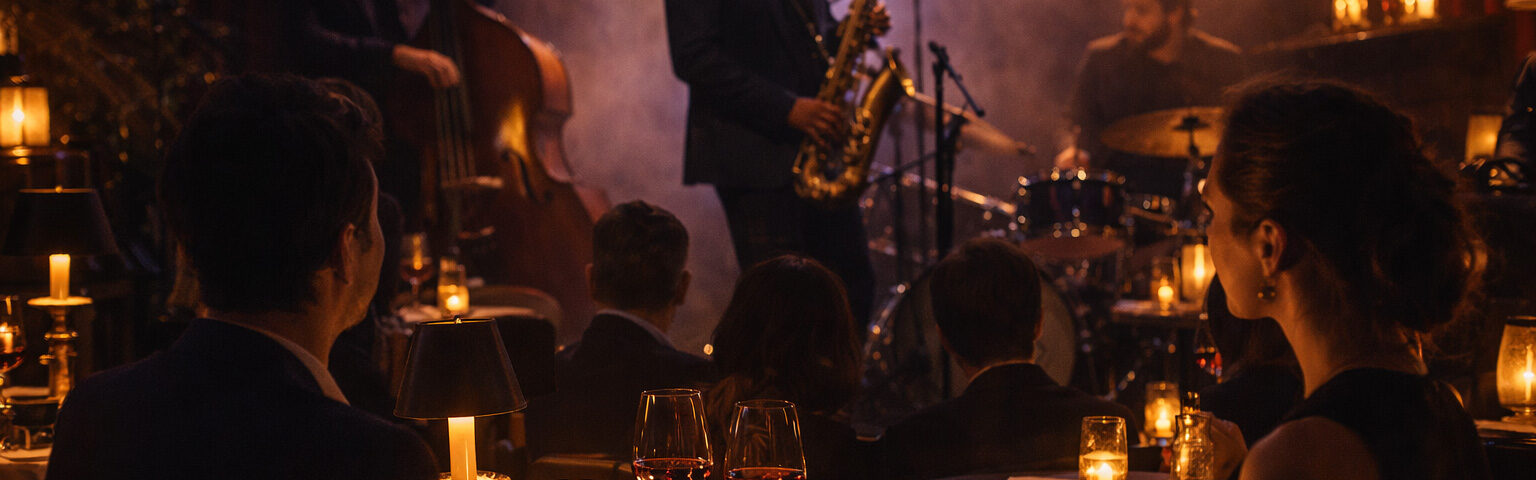
Atmosphere is one of the most undervalued elements of cultural life. It shapes how music is received, how people gather, and what remains memorable after an evening ends. Jazz, perhaps more than any other genre, depends on atmosphere to complete itself. The relationship between music, setting, and social ritual has long been part of the wider history of jazz clubs, where performance and environment are inseparable. A strong set in the wrong room can feel diminished. A smaller performance in the right room can feel transformative.
That mood has proven remarkably resilient across generations. Even as the music itself changes, the appeal of the jazz environment remains intact. People are drawn not only to the sound, but to the style of encounter it creates. Jazz encourages a slower pace of engagement. It rewards concentration, conversation, and a certain kind of restraint. In a louder cultural landscape, that alone can feel luxurious.
Why Atmosphere Matters
Atmosphere is one of the most undervalued elements of cultural life. It shapes how music is received, how people gather, and what remains memorable after an evening ends. Jazz, perhaps more than any other genre, depends on atmosphere to complete itself. A strong set in the wrong environment can feel diminished. A smaller performance in the right room can feel transformative.
This is why the lifestyle around jazz still matters. The architecture of the venue, the quality of the lighting, the timing of the service, the arrangement of the seating, the acoustics of the room, and even the route home afterward all contribute to the experience. These details do not distract from the music. They support it.
Dress, Detail, and Restraint
One reason jazz lifestyle continues to appeal is that it preserves a connection between culture and presentation. Not in a rigid or theatrical sense, but through an appreciation for detail. Good tailoring, thoughtful interiors, proper glassware, vinyl sleeves, menus that understand pacing, and rooms that allow silence to exist between notes all belong to the same sensibility. They reflect the idea that refinement is cumulative.
Restraint is central to this. The most successful jazz environments rarely feel over-designed. They rely on tone rather than excess, confidence rather than spectacle. A space can be memorable without becoming loud. A table can feel elegant without becoming performative. Jazz lifestyle is persuasive precisely because it trusts subtlety.
The Return of the Considered Evening
In recent years, there has been a renewed appetite for evenings that feel composed rather than improvised in the logistical sense. People are increasingly drawn to experiences that combine music, setting, food, and conversation into something coherent. Jazz fits naturally within this return to the considered evening. It offers a model of social life that values presence over volume and depth over speed.
This is also why jazz lifestyle connects so well to travel. A destination with the right bars, terraces, clubs, hotel lounges, and late-night energy becomes more than a place to pass through. It becomes part of the cultural rhythm itself. The evening begins before the performance and lingers long after it ends.
More Than Aesthetic
It would be easy to reduce jazz lifestyle to an aesthetic category, but that misses the point. Its deeper appeal lies in the values it implies: attentiveness, patience, taste, curiosity, and the belief that context changes experience. These are not decorative qualities. They shape how people listen, how they gather, and how they remember.
That is why jazz lifestyle continues to hold its place. It offers a way of moving through culture that feels deliberate without being rigid, elegant without being overstated, and intimate without becoming small. In the end, it is not simply about liking jazz. It is about liking the kind of world jazz makes possible.