
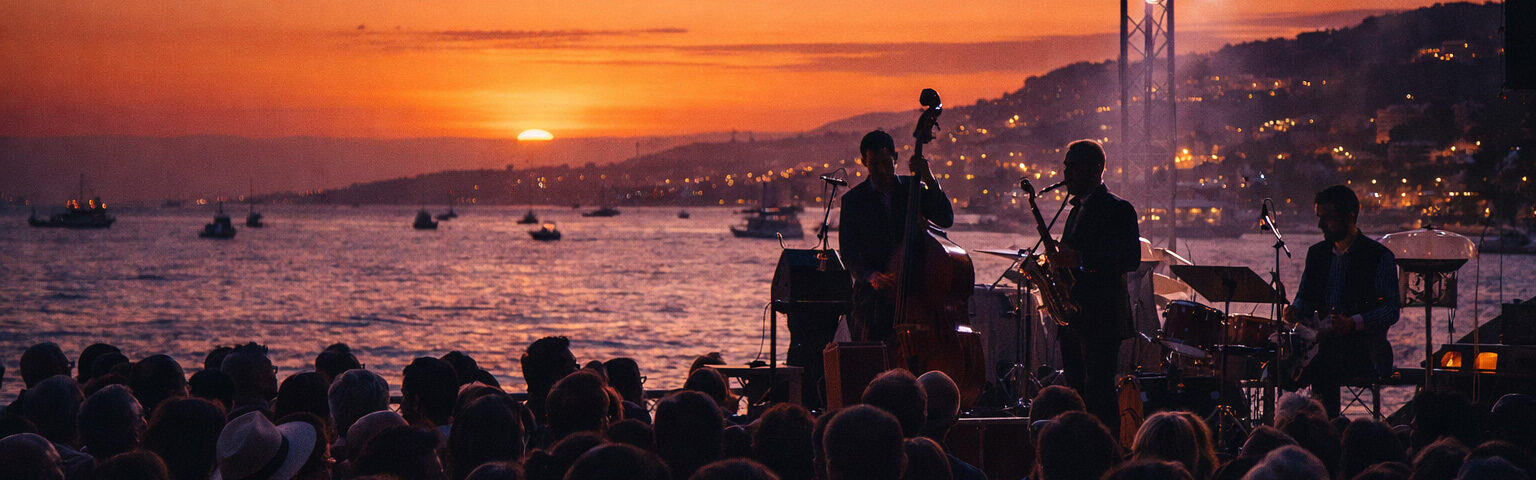
Coastal towns have always had a particular relationship with jazz. Perhaps it is the openness of the horizon, the slower pace of evening movement, or the way water changes the acoustics of a place both literally and emotionally. Whatever the reason, jazz festivals held near the sea often feel distinct from their inland counterparts. They seem to allow more room for atmosphere to accumulate. The music arrives not as an interruption to the environment, but as something that settles naturally into it.
This is one reason coastal jazz events continue to hold such strong appeal. They offer a double rhythm: the formal rhythm of performance and the looser rhythm of destination. Audiences move between stages, terraces, waterfront promenades, late dinners, and after-hours bars with a different kind of ease. The festival no longer feels confined to a programme. It spreads into the setting itself.
Why the Coast Changes the Experience
Place influences attention. A performance heard in a dark urban room carries one kind of intensity; a set heard with evening light fading over a waterfront carries another. Coastal settings tend to soften the transition between daily life and night-time performance. They invite lingering. A walk by the sea before the first set or after the final encore changes the emotional frame of the evening. The music is not isolated. It becomes part of a wider sensory sequence.
This is not a matter of scenery alone. The best coastal festivals understand how to use their location intelligently. They programme outdoor stages without losing intimacy, balance open-air spectacle with smaller interior venues, and allow enough breathing room that the setting enhances rather than overwhelms the performance. The wider relationship between music and place has long shaped the history of the music festival, but coastal jazz events often make that connection feel especially vivid. When done well, the coast acts less as backdrop than as atmosphere.
The Festival Beyond the Stage
One of the strengths of destination-led jazz festivals is that they encourage a broader definition of festival culture. The event begins before the ticket is scanned and continues after the set has ended. Breakfast terraces, marina walks, candlelit dinners, harbour bars, and conversations carried into the early hours all become part of the total experience. The distinction between programme and place begins to dissolve.
This is especially important for jazz because the genre has always rewarded context. Listening deepens when a destination feels coherent. When travellers can move from performance to dinner to late drink to private retreat without losing the mood of the evening, the festival becomes more memorable. It feels composed rather than merely attended.
Curation, Timing, and Light
The strongest coastal festivals understand timing as carefully as they understand booking. Sunset sets carry a different emotional charge from late-night club sessions. Afternoon performances invite discovery and ease, while post-dinner sets encourage attention of another kind entirely. The changing light of a destination becomes part of the programme structure, shaping how audiences move and what they remember.
Light matters because it helps define mood. Jazz has always belonged to twilight, to the hours when the day loosens its grip and the evening becomes more ambiguous. Coastal destinations often amplify this transition beautifully. The sky, the water, and the architecture all take on tonal shifts that make the music feel embedded in a larger atmosphere.
Why These Festivals Endure
Coastal jazz festivals endure because they promise more than a line-up. They offer the possibility of a complete experience in which music, travel, and environment reinforce one another. For listeners, that combination remains unusually persuasive. It transforms attendance into immersion and turns a sequence of performances into a place-based memory.
That is why these events continue to matter. They show what festival culture can become when a destination is treated not merely as a host, but as a partner in the experience. Jazz has always thrived when sound is given the right setting. By the sea, that truth becomes impossible to miss.